
টেকনোলজি
টেকনোলজি

AIRBUS
The current company is the product of consolidation in the European aerospace industry, tracing back to the formation of the Airbus Industrie GIE consortium in 1970. In 2000, the European Aeronautic Defence and Space Company (EADS) NV was established. In addition to other subsidiaries pertaining to security and space activities, EADS owned 100% of the pre-existing Eurocopter SA, established in 1992, as well as 80% of Airbus Industrie GIE. In 2001, Airbus Industrie GIE was reorganised as Airbus SAS, a simplified joint-stock company. In 2006, EADS acquired BAE Systems' remaining 20% of Airbus.[16] EADS NV was renamed Airbus Group NV and SE in 2014 and 2015, respectively.[17][18][19] Due to the dominance of the Airbus SAS division within Airbus Group SE, the executive committees of the parent and subsidiary companies were aligned in January 2017, but the companies were kept as separate legal entities. The holding company was given its present name in April 2017.[20]
Airbus (est. 2000, renamed 2017) |
|

Airbus Corporate Jets markets and modifies new aircraft for private and corporate customers. It has a model range that parallels the commercial aircraft offered by the company. Following the entry of the 737-based Boeing Business Jet, Airbus joined the business jet market with the A319 Corporate Jet in 1997. Although the term Airbus Corporate Jet was initially used only for the A319CJ, it is now often used for all models, including VIP widebodies. As of December 2008, 121 corporate and private jets are operating, and 164 aircraft have been ordered.[22]
The company is also a 10% owner of Dassault Aviation, which builds the Falcon family of smaller business jets.
Military
Airbus Defence and Space markets and either builds or modifies new aircraft for military use. Airbus became increasingly interested in developing and selling to the military aviation market in the late 1990s. It embarked on two main fields of development: aerial refuelling with the Airbus A310 MRTT (Multi-Role Tanker Transport) and later the Airbus A330 MRTT, and tactical airlift with the Airbus A400M Atlas. The company has also continued to market and assemble some military aircraft previously offered by the companies that formed Airbus, notably CASA. The company is also a 50% owner of the ArianeGroup joint venture which builds the Ariane 5 space launch vehicle, a 46% owner of the Eurofighter joint venture which builds the Typhoon fighter jet, a 42.5% owner of the Panavia Aircraft joint venture which built the Tornado fighter jet, a 37.5% owner of the MBDA joint venture which builds missiles, and a 10% owner of Dassault Aviation which builds the Rafale fighter jet, and previously, the Mirage 2000 fighter.
Helicopters
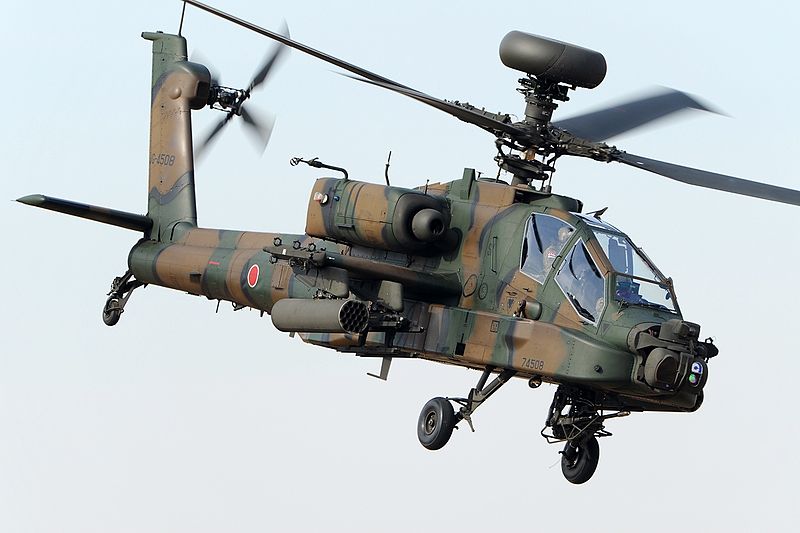
The division's civilian products include the single engine H125 and H130, the light twin engine H135 and H145, the medium twin engine H155 and H160, the super medium twin engine H175, and the heavy twin engine H215 and H225.
Military products include the Tiger attack helicopter, along with militarized versions of the H125, H135, H145, H160, H175, H215, and H225.
The company is also a 62.5% owner of the NHIndustries joint venture, which builds the NH90 military utility helicopter.
Organisation
Commercial aircraft generated 74% of total revenue for the Airbus group in 2018 and 72% in 2023.[27][28] The key trends for Airbus Commercial Aircraft (excluding Defence, Space and Helicopters) are as of each financial year ending December 31:[29]
No comments